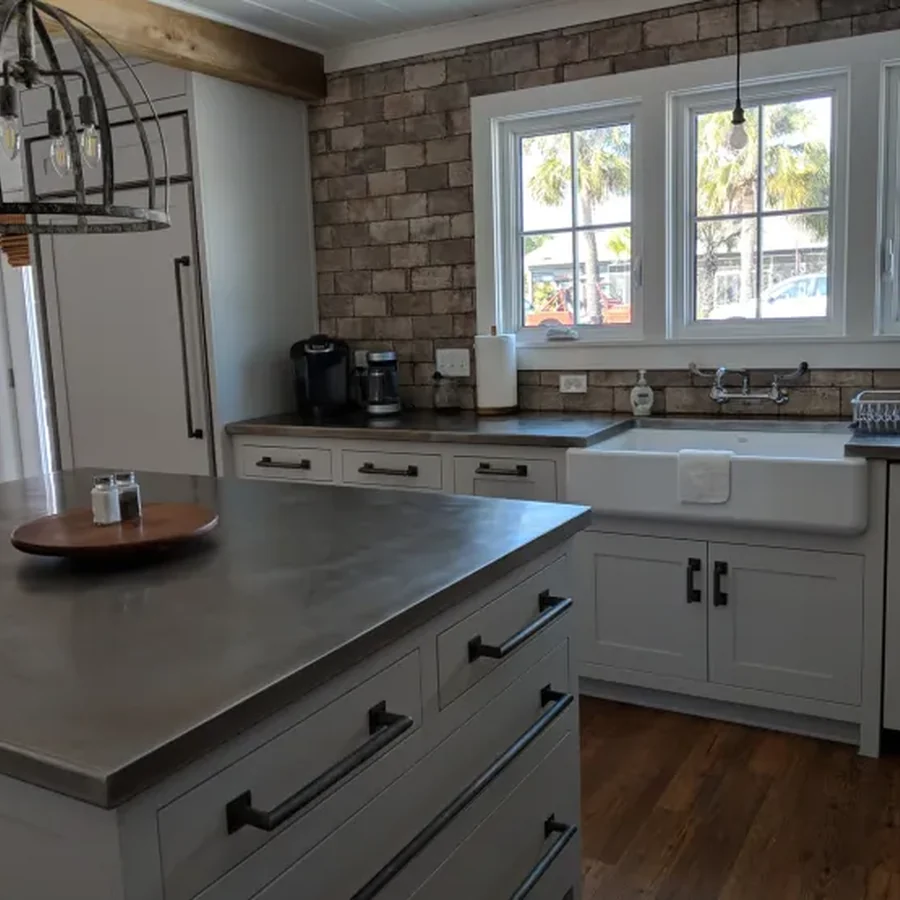
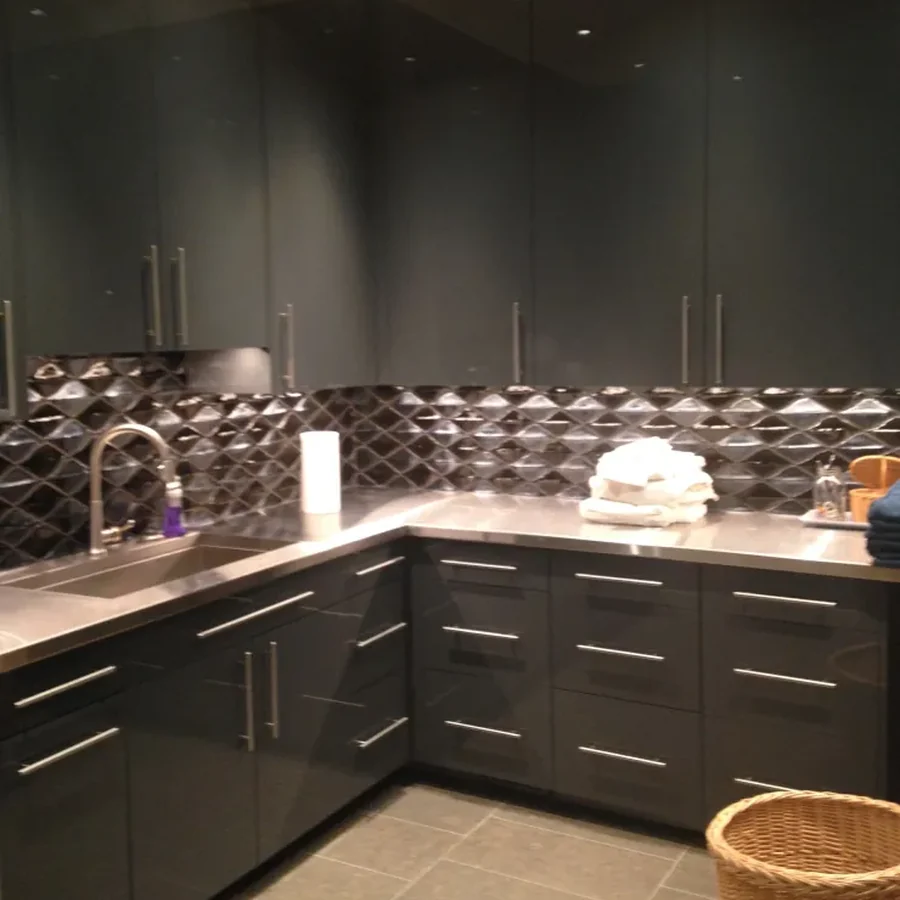
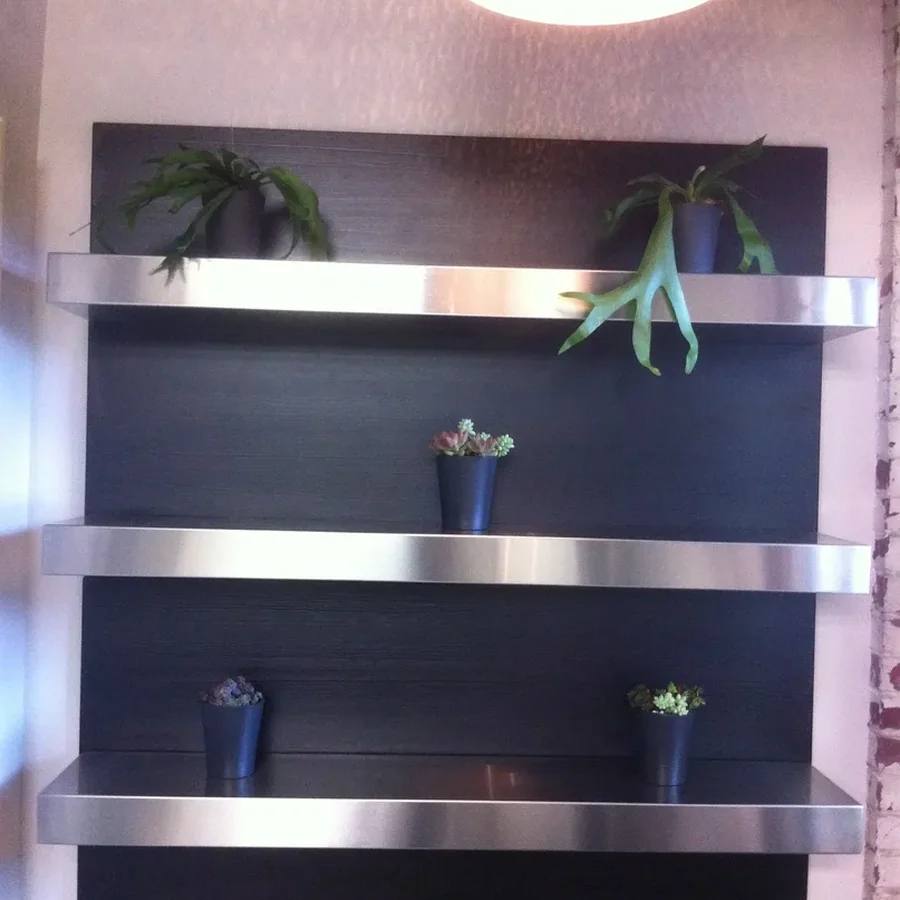
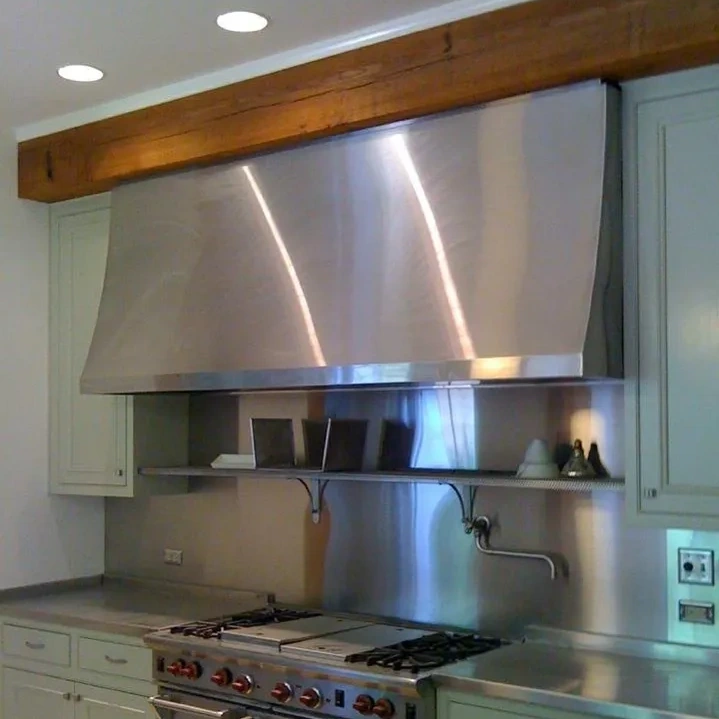
Bradford Custom Metal fabricates custom metalwork for homes in Birmingham, including countertops, backsplashes, kitchen hoods, handrails, shelving, sinks, and specialty residential features.
Stainless steel, blackened steel, brass, aluminum, and copper can each give the same space a very different result.
CUSTOM METALWORK FOR HOMES
Fit, Finish & Function Should Belong to the House.
Residential metalwork is often visible enough to become part of the architecture. A hood sits beside cabinetry and tile. A handrail is touched every day. A countertop or backsplash reflects the room around it.
That makes proportion, fit, finish, surrounding materials, and everyday use just as important as the fact that the piece is made from metal.
Bradford fabricates around the actual space and project information rather than treating a custom home feature like a stock product.
The value of custom fabrication is the ability to respond to the house itself: dimensions, materials, architecture, use, and the finished look the project calls for.
01
Custom Fit
Cabinetry, walls, stairs, openings, sinks, appliances, edges, and surrounding construction can all be part of the fabrication conversation.
02
Material Flexibility
Stainless, blackened steel, brass, aluminum, and copper create different visual weight, color, reflection, and maintenance characteristics.
03
Design + Function
A residential piece can be visually prominent and still need to work hard every day. The best result handles both without pretending they are separate problems.
POPULAR RESIDENTIAL PROJECTS
Custom Metalwork for Kitchens, Stairs & Interior Details
These are common residential projects where custom dimensions, material, and finish can make the difference between a piece that merely fits and one that feels intentional.
Residential metalwork is unusually sensitive to finish because the surrounding stone, wood, cabinetry, hardware, tile, paint, and light all affect how the metal reads.
Material choice should follow the application, exposure, finish, maintenance, touch, weight, and surrounding conditions of the project.
Custom Metalwork That Lives With the Architecture.
The point is not to make a home feel industrial. It is to use metal where its fit, durability, finish, or visual character adds something useful to the space.
01
Custom Kitchen & Interior Metalwork
Hoods, countertops, backsplashes, sinks, shelving, trim, and specialty details integrated with cabinetry and the rest of the interior.
02
Built Around Fit, Finish & Function
Dimensions, edge conditions, adjacent materials, cleaning, touch, moisture, heat, and everyday use can all shape the final piece.
03
Support for Homeowners & Project Teams
Homeowners, builders, contractors, designers, and other project teams can start with drawings, dimensions, photographs, or the basic project need.
PROJECT WORKFLOW
A Clear Path From the First Conversation to Fabrication
A straightforward project path keeps the work centered on what actually needs to be fabricated.
01
Start the Conversation
Share what you are building, where the metal will be used, and any dimensions, drawings, photographs, or inspiration you already have.
02
Define the Scope
Material, finish, dimensions, surrounding conditions, intended use, and project details are clarified before fabrication begins.
03
Fabrication & Finishing
The piece is fabricated and finished around the requirements defined for the project.
04
Ready for the Next Phase
Finished fabrication is prepared for the next project stage based on the agreed scope. Installation or code responsibilities are not implied unless separately confirmed.
BIRMINGHAM HOMES
Planning a Custom Metal Feature for a Home?
Send the dimensions, photographs, material or finish preferences, and the part of the house the piece needs to fit.
Most residential fabrication questions become easier once the space, dimensions, material, and intended use are clear.
What residential metalwork does Bradford fabricate?
Bradford fabricates residential countertops, backsplashes, kitchen hoods, handrails, shelving, sinks, and other specialty metal features depending on the project.
Do you work directly with homeowners?
Bradford can review residential project inquiries from homeowners as well as builders, contractors, designers, and project teams.
What materials can I choose from?
Bradford works with stainless steel, blackened steel, brass, aluminum, copper, and other metals depending on the project. Appearance, use, exposure, cleaning, and maintenance can all affect the choice.
Can you fabricate multiple metal pieces for the same kitchen?
Related pieces such as a hood, countertop, backsplash, sink, shelving, or trim can be discussed together when the project calls for a coordinated material and finish.
Do you install residential metalwork?
If installation or field coordination is part of your project, include that requirement with the inquiry so the scope can be clarified.
What should I send for a quote?
Send approximate dimensions, photographs, drawings or sketches if available, material and finish preferences, project location, target timing, and information about the surrounding construction the piece needs to fit.
REQUEST A QUOTE
Need a Residential Metal Fabrication Quote?
Send the project details you already have and describe what the finished piece needs to do in the space.